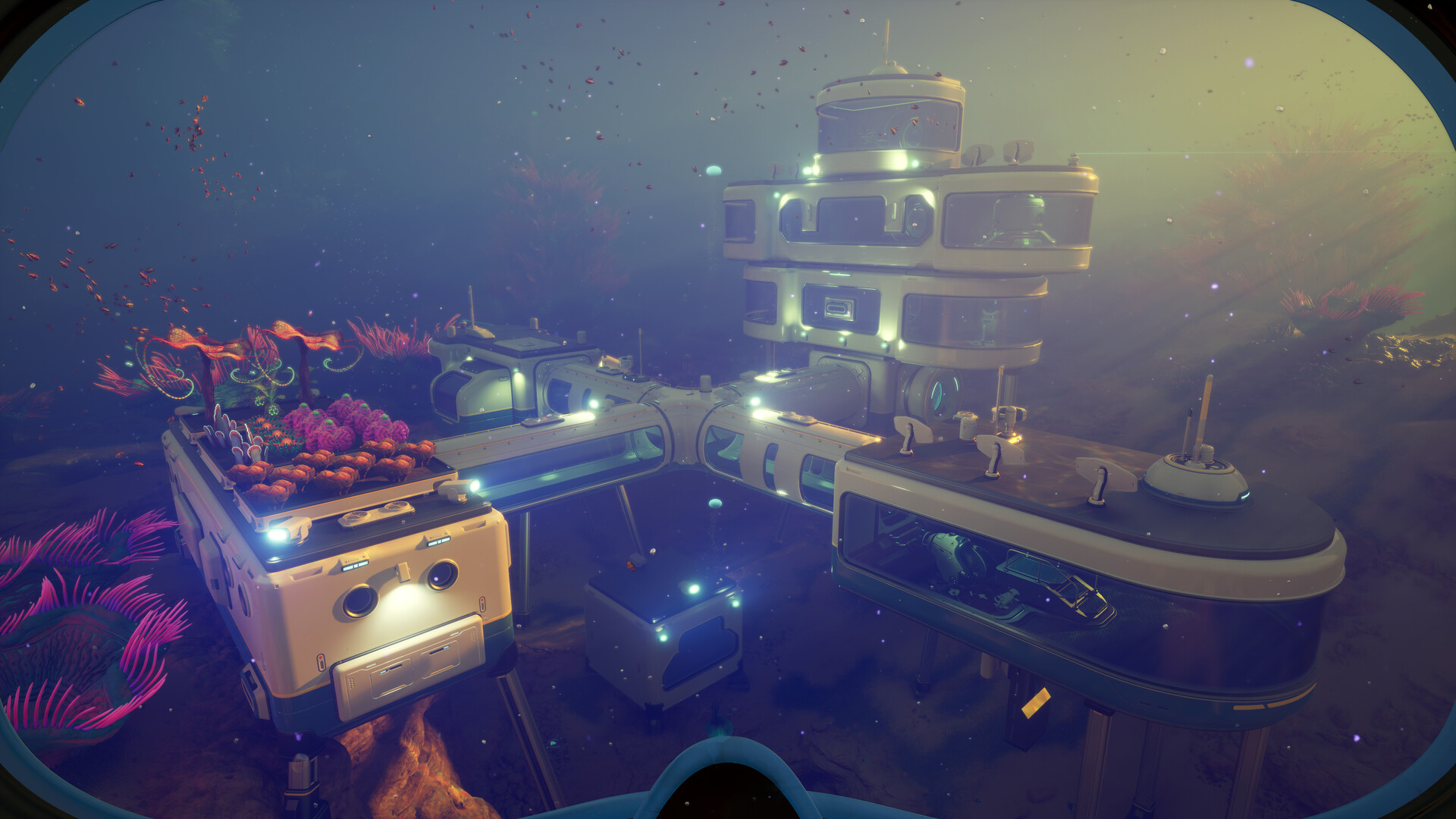
Subnautica 2 base building tips
The best Subnautica 2 base building tips start with function. A base should shorten travel, power crafting, organize materials, support food and water, and make deeper routes repeatable. In the first sessions, a small reliable base is better than a beautiful shell with no power, storage, or Fabricator workflow.
Subnautica 2 supports solo and online co-op base building, so build with shared movement in mind. Four players can make a base useful quickly, but they can also scatter materials across confusing storage unless the layout is simple.
First base checklist
| Piece | Build when | Purpose |
|---|---|---|
| Corridor or starter room | You have a nearby route worth repeating. | Gives the base a functional core. |
| Hatch | Immediately after the shell. | Makes the base usable as an oxygen and work point. |
| Power source | Before adding more rooms. | Keeps Fabricator, terminals, and future support online. |
| Storage | As soon as resource loops begin. | Prevents hidden bottlenecks and random hoarding. |
| Fabricator support | When the route can feed recipes. | Converts gathered materials into progression. |
| Processor, Scanner Station, Bio Lab, or vehicle support | When a specific route or recipe needs it. | Adds capability after the base has a reason. |
Do not judge the first base by size. Judge it by whether it lets you leave with a clear objective and return with materials that become tools, oxygen support, vehicle parts, or route access.
Where to place the first base
Pick the first base near a safe route intersection, not the most dramatic view. A strong location has shallow oxygen access, nearby construction basics, a visible path back to the Lifepod, and at least one useful direction for future expansion. If a location is pretty but far from materials, it will slow every craft.
Good first-base criteria:
- Close enough to early resource loops that storage fills naturally.
- Easy to describe to co-op teammates.
- Clear terrain around the hatch so players do not get stuck or lost.
- Room to add power, storage, and vehicle support later.
- Not directly inside a hostile or low-visibility route.
Use first base location for a more focused placement check.
Storage before decoration
Storage is the base feature that saves the most time. Use separate containers or areas for construction basics, electronics, plant materials, food and water, vehicle parts, and unknown samples. Co-op groups should deposit strategic resources before anyone crafts from personal inventory.
If you keep losing track of materials, the solution is not another farming trip. First fix the storage categories, then decide what is truly missing.
Power and expansion order
Add power before adding space. A new room should support crafting, charging, farming, scanning, storage, Adaptations, or vehicle work. If it does not change a route, leave it for later.
Suggested expansion order:
- Core room, hatch, power, and storage.
- Fabricator workflow and short resource loops.
- Food, water, battery, or Bio Lab support as recipes require.
- Scanner or Processor support when information becomes the blocker.
- Vehicle Fabricator, dock, or Tadpole-related support when range becomes the blocker.
- Comfort, decoration, and larger layouts after the base economy is stable.
Outposts and co-op bases
Forward outposts should be smaller than the main base. Build them to solve one problem: oxygen support, storage for a dangerous loop, vehicle parking, or a staging point near deeper resources. If an outpost starts demanding constant material runs, it is no longer reducing risk.
In co-op, agree on one main base and one active outpost. Too many half-built bases create storage confusion and make host-save progress harder to understand.
When to move or rebuild
Move only when the old base no longer supports the routes that matter. A base near the Lifepod can stay useful as a shallow crafting hub even after you build a forward outpost. Rebuilding everything too early wastes materials and interrupts progression.
Use this test before moving: can the new location shorten a repeated route, support Tadpole operations, reach a better resource family, or reduce a dangerous return? If not, keep the current base and add a compact outpost instead. Deconstructing or relocating should follow route evidence, not boredom with the first layout.
What to do next
Use crafting priorities before spending base materials, power and storage to stabilize the workflow, and multiplayer guide if the base is shared by a group.