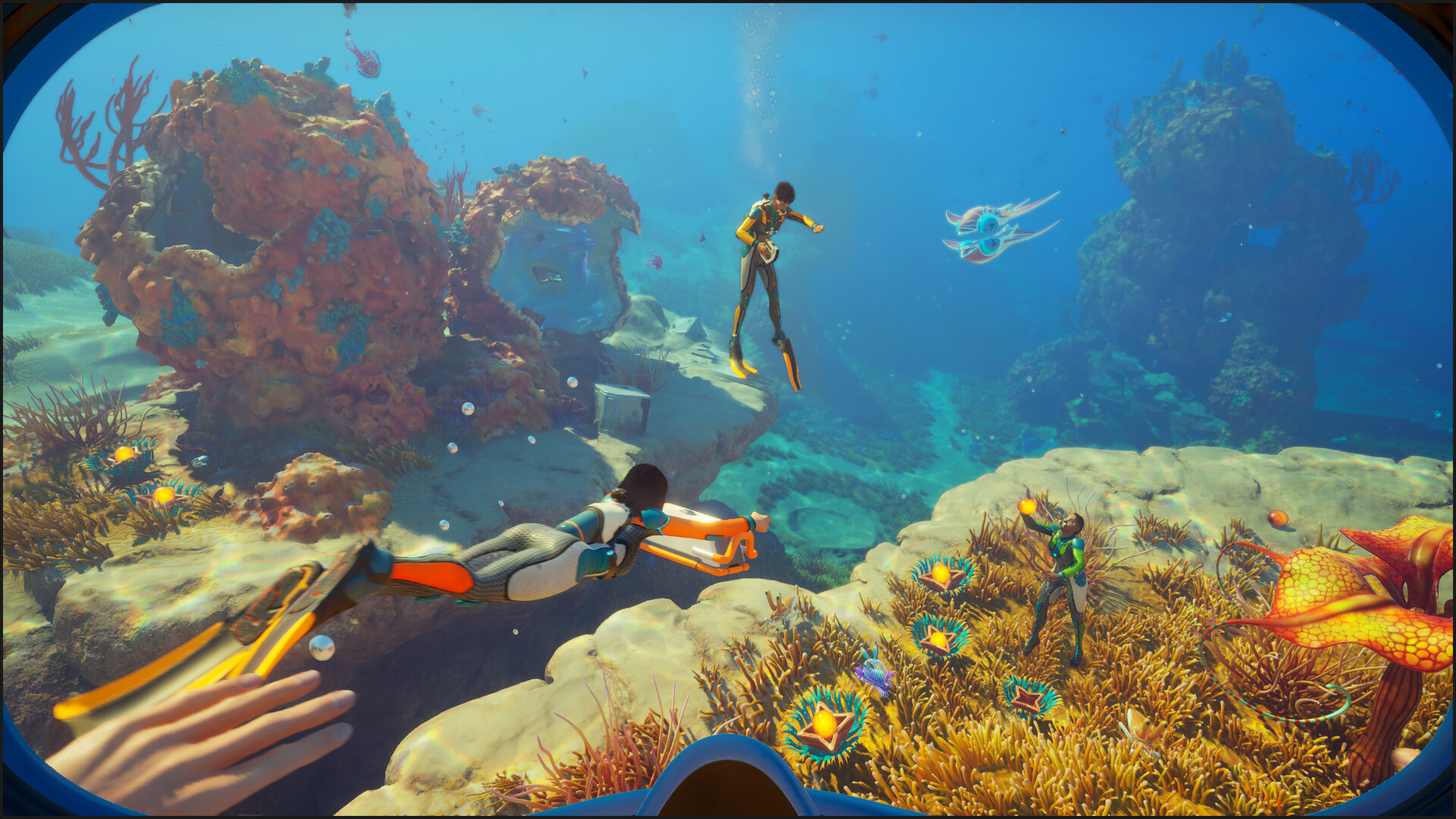
Subnautica 2 beginner guide overview
This Subnautica 2 beginner guide is for the first few sessions in Early Access: stabilize oxygen, food, water, scanning, storage, and route memory before you chase distant signals. Subnautica 2 launched in Early Access on May 14, 2026, and Unknown Worlds says the build will keep changing with new biomes, creatures, craftables, features, narrative, fixes, and optimization. Treat this page as a decision order, not a permanent coordinate sheet.
The safest beginner loop is simple: leave the Lifepod, gather only the resources tied to the next upgrade, scan anything reachable, return early, craft one practical improvement, then repeat with a slightly wider route. That rhythm matters more than rushing a story marker because most early losses come from low oxygen, full inventory, or unclear return paths.
Recommended beginner route
| Stage | Goal | What to do | Stop when |
|---|---|---|---|
| 1 | Learn the shallows | Swim short loops around the Lifepod and memorize two landmarks. | Oxygen pressure makes the route feel rushed. |
| 2 | Gather essentials | Bring back basic materials such as Titanium, Copper, and Quartz from nearby shallow routes. | Inventory starts filling with items you cannot name a use for. |
| 3 | Unlock information | Prioritize the Scanner and scan fragments, plants, creatures, and structures that are safe to reach. | A scan target sits inside a cave or hazard you cannot exit confidently. |
| 4 | Build a minimal base | Use the Habitat Builder for a small functional base: corridor, hatch, power, storage, and a Fabricator path. | You are adding rooms before solving power, food, water, or storage. |
| 5 | Extend range | Improve oxygen, bring route supplies, then work toward the Tadpole when distance becomes the bottleneck. | The next marker is farther than your return plan. |
Check the NOA system or PDA-style messages after major returns. Subnautica 2 does not play like a quest checklist where every objective is pushed onto the screen; route clues, scans, logs, and Blackbox signals are part of the progression language.
First tools to prioritize
The best first crafts are the ones that create safer decisions. A Scanner reveals blueprints and database entries. The Habitat Builder turns a useful location into a work hub. The Sonic Resonator becomes important when a route or infected growth requires it. A Repair Tool matters once vehicles, base pieces, or damaged systems become part of your loop. Air Bladder, fins, or flashlight-style utility can help, but they should not delay the tools that unlock scans, routes, and base workflow.
Use this priority rule before spending materials:
- Craft information tools before convenience tools.
- Craft oxygen and survival upgrades before long signal pushes.
- Build storage and power before expanding rooms.
- Save bottleneck materials for tools, vehicles, and route support.
- In co-op, avoid four players crafting the same low-impact item from shared supplies.
For a fuller order, continue with early tools and crafting priorities.
Food, water, and oxygen basics
Early oxygen is tight enough that every unfamiliar route should be a scouting trip first. Standard, high-capacity, and later oxygen upgrades matter because they extend every other activity. Rebreather-style depth support and emergency ascent tools become more valuable once routes move below safe shallow loops.
Food and water are also part of progression. Early alien life may require Adaptations or recipes before it becomes dependable. Until your food and water loop is stable, avoid long dives that assume you can improvise every need on the way back. Treat consumables as route tools: bring enough to return, not enough to justify wandering without a goal.
Beginner mistakes to avoid
- Chasing every Blackbox signal before you can repeat the route back.
- Building a large base before power, storage, and Fabricator access are useful.
- Filling inventory with random plants or minerals instead of gathering for one craft.
- Ignoring hostile fauna because you expect combat to solve the problem.
- Playing co-op as four solo players instead of sharing scans, storage, food, water, and route language.
What to do next
Once the beginner loop feels stable, use first hour route for a tighter opening path, resource locations for target materials, and survival strategy before pushing into deeper or more hostile routes.