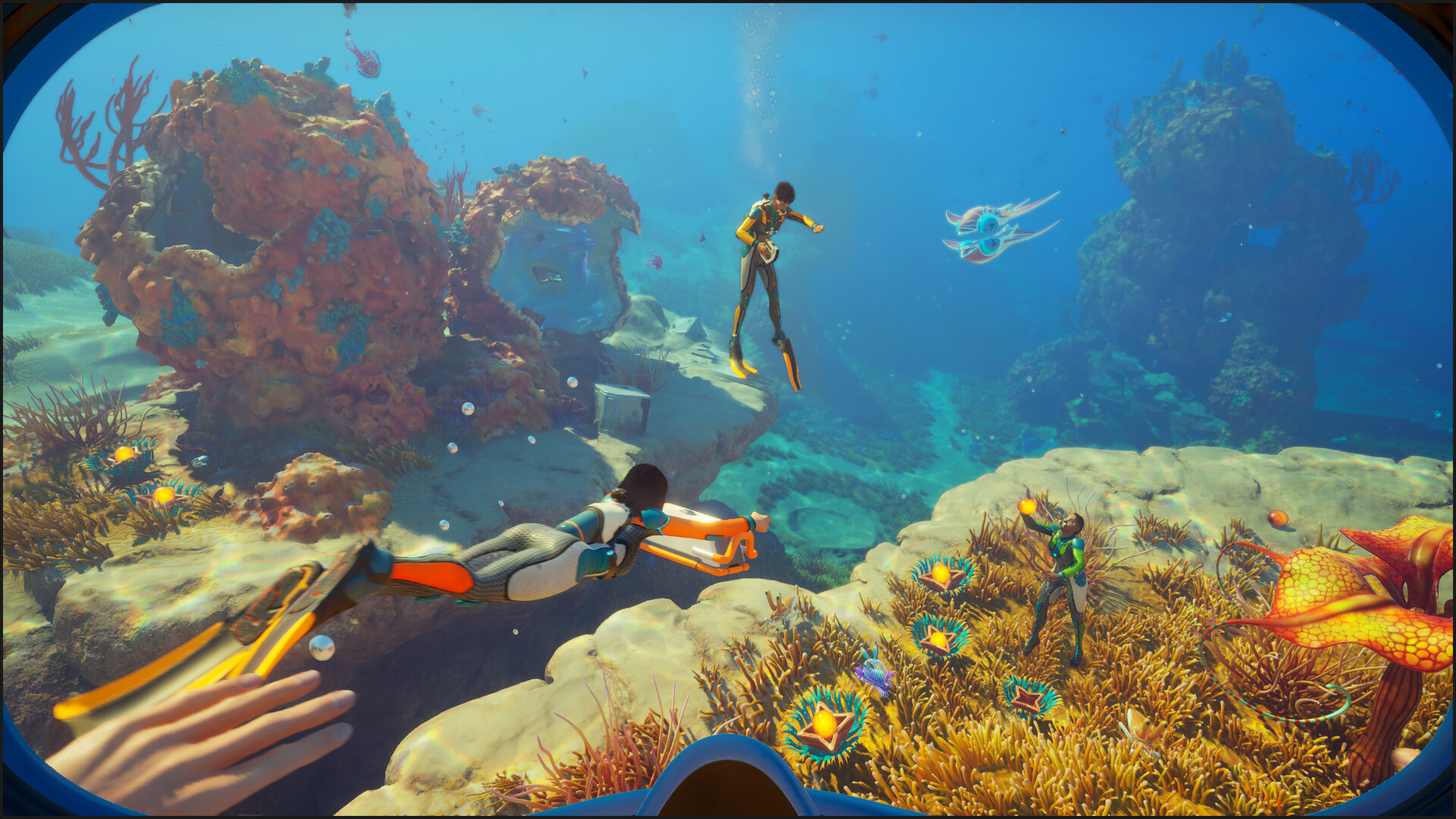
Subnautica 2 shared resources overview
Subnautica 2 shared resources decide whether co-op feels efficient or chaotic. A four-player session can gather quickly, but it also burns through food, water, oxygen support, and strategic materials faster than a solo run. Shared materials should be visible, sorted by purpose, and tied to the current team objective.
The rule is simple: anything that blocks team progress belongs in shared storage before it belongs in a personal locker.
What counts as shared resources
| Category | Examples | Storage rule |
|---|---|---|
| Tool bottlenecks | Scanner, Habitat Builder, Sonic Resonator, Repair Tool materials. | Store near the Fabricator or crafting area. |
| Vehicle parts | Tadpole materials, module materials, power cells, repair supplies. | Protect until the team agrees on vehicle spending. |
| Base infrastructure | Power, storage, hatch, room, terminal, and Fabricator materials. | Keep separate from personal crafting overflow. |
| Food and water | Water materials, edible resources, ingredients tied to recipes or Adaptations. | Refill before long routes, not after panic starts. |
| Unknown or new samples | Plants, creature drops, biological materials, infected-route materials. | Scan, label mentally, and store apart until recipes clarify them. |
Common construction basics can move through normal storage, but even common materials need order when several people are crafting.
Deposit order after each route
End every group route with the same deposit order:
- Food, water, and emergency supplies.
- Vehicle and tool bottlenecks.
- Base power and infrastructure materials.
- Rare or unidentified samples.
- Common overflow.
This prevents hidden inventory. Hidden inventory is when one player has the missing material in a backpack or personal locker while everyone else thinks the team is short.
Crafting from team storage
Do not craft from strategic storage just because the recipe is available. First ask whether the craft improves the session objective: safer scan route, better oxygen margin, base workflow, Tadpole progress, or food and water stability. If the craft only helps one player while delaying the vehicle, base, or shared tool path, wait.
Small convenience items can be crafted freely from surplus. Bottleneck materials need a short callout before spending.
Assign resource routes
Co-op resource gathering should have route owners. One player can run shallow construction basics, another can gather electronics minerals, another can scan, and another can sort or build. If two players run the same route, decide whether the group actually needs doubled output.
Keep the missing list short. Two or three named materials create clear routes. Ten materials make everyone scatter and return with mismatched inventory.
Food and water pressure
Food and water are shared resources too. Co-op groups often underestimate this because exploration feels faster with more players. Before a long signal route, build a reserve for the whole team. If one player is handling base storage, have that player check whether the next trip has enough water, food, and batteries before the group leaves.
Session reset checklist
End a co-op session by making the next start obvious. Empty backpacks into the right storage, announce newly unlocked blueprints, repair or recharge key equipment, and write down the two or three missing materials for the next craft. If the team stops with materials scattered across personal lockers, the next session begins with confusion instead of progress.
This reset is especially useful when the host save belongs to one player. Teammates may not remember what was crafted, which Blackbox route was tested, or where the Tadpole was parked. A short reset keeps the shared world readable even if the same group does not return immediately.
Simple shared storage layout
Keep the first co-op storage area close to the Fabricator and easy to read from left to right. Put common building materials first, then electronics, biological samples, food and water, vehicle parts, and overflow. If the game build does not give you perfect labels, use physical placement and repeated team language: “left locker is building,” “middle is electronics,” “right is vehicle.”
Once the base grows, move overflow away from the crafting lane. The materials needed for the next team craft should always be visible without searching every container. That one layout habit saves more time than another random gathering trip.
What to do next
Use roles and sessions to divide jobs, storage organization to clean up the base, and multiplayer guide for broader co-op route planning.