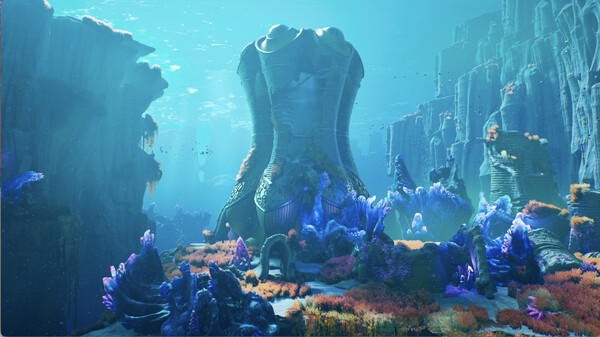
Subnautica 2 Walkthrough and Progression Guide overview
This Subnautica 2 Walkthrough and Progression Guide turns the Early Access opening into a practical route chain: stabilize survival, scan for blueprints, build a functional base, follow Blackbox and NOA clues, unlock Adaptations, then use the Tadpole and outposts to push deeper. The current build can change, so the guide avoids fixed coordinates and focuses on what each stage is supposed to unlock.
Progression in Subnautica 2 is not only a quest list. It is a loop of scanning, crafting, route testing, base support, and biological adaptation. If a new objective does not improve the next safe dive, delay it until your oxygen, supplies, and tools can support the trip.
Recommended progression order
| Stage | Main objective | Practical target | Why it matters |
|---|---|---|---|
| 1 | Lifepod safety | Shallow material loop, oxygen discipline, first scans. | Gives you a repeatable start point. |
| 2 | Tool unlocks | Scanner, Habitat Builder path, survival utility, Sonic Resonator when required. | Turns exploration into blueprints and route access. |
| 3 | Basic base | Corridor, power source, hatch, storage, Fabricator support, later Processor or NOA terminal. | Converts random gathering into planned crafting. |
| 4 | Adaptations | Follow clues toward Angel Comb-style adaptation progress and infected growth routes. | Opens food, heat, language, or environmental gates depending on the current objective. |
| 5 | Blackbox and sites | Visit Welcome Center, abandoned habitats, Tadpole Pens, and other logged locations when prepared. | Pushes story and key technology. |
| 6 | Vehicle expansion | Build and upgrade the Tadpole when distance, oxygen, or cargo becomes the blocker. | Makes deeper resource and signal routes repeatable. |
The exact order can flex, but the dependency should not: do not make a long story push before you can return, repair, store, and craft from the results.
How to read progression clues
Subnautica 2 expects you to use scans, logs, NOA messages, Blackbox signals, and environmental gates together. A hot zone, untranslated alien interface, infected organism, or sealed route is usually not just scenery; it is a hint that a tool, Adaptation, or blueprint is missing.
When the route stalls, do this:
- Recheck recent NOA and databank entries.
- Scan nearby life, structures, and fragments that were skipped.
- Sort materials and identify the one upgrade that changes the blocked route.
- Return to the obstacle only after the route can be repeated safely.
This is especially important during Early Access because a patch can move a resource or adjust a recipe, while the clue structure remains easier to trust.
Adaptations and route gates
Adaptations are a progression layer, not a side activity. They can solve problems like digestive incompatibility, heat intolerance, or interaction limits that make a route feel impossible. If a biome edge damages you, a creature clue points toward infected life, or a structure cannot be interpreted, stop treating it as a brute-force problem and look for the related biological or tool unlock.
Do not overextend while chasing Adaptations. Some routes require Sonic Resonator-style preparation or better oxygen support, and hostile fauna can turn a simple scan into a failed dive. Scout first, craft second, then return with a clear objective.
Solo and co-op progression
Solo progression should be conservative: one objective, one return rule, one craft after each route. Co-op can move faster because scans and discoveries benefit the team, but it also creates more food, water, and storage pressure. Assign roles before leaving: scout, scanner, materials runner, builder, or vehicle support.
For group sessions, the host save matters. Make sure everyone understands whose world is being progressed, what the next shared unlock is, and where strategic materials should be deposited.
Common progression mistakes
- Treating every signal as urgent instead of preparing the route.
- Crafting new items because they are new, not because they solve a blocker.
- Ignoring Adaptations when the game is clearly presenting an environmental gate.
- Expanding base rooms before power, storage, and Fabricator workflow are stable.
- Taking the Tadpole deeper without a landmark chain and return rule.
What to do next
Use first hour route for the opening, deep dive checklist before longer trips, and Tadpole guide once distance becomes the main progression blocker.